
Have you ever had a gut feeling that turned out to be right, or dreamed about an event that later happened? Those moments—often written off as coincidence—can feel like brief flashes of knowledge that come from somewhere beyond the usual five senses. This guide explains what people mean by “psychic” experience, how different psychic abilities show up in daily life, and what practical steps you can take to explore your own intuitive sense.
What Is a Psychic? Defining the Unexplained
A psychic is commonly described as a person who seems to perceive information that goes beyond the five physical senses. The English term “psychic” is derived from the Greek psychikos, which relates to the soul or mind; popular images of crystal balls and fortune-tellers capture only a small slice of what people mean by psychic experience.
At its most practical level, psychic ability refers to the capacity to notice and interpret subtle patterns of energy or information that others may miss—about the past, the present, or possible futures. Some people treat these impressions as heightened intuition, while others see them as spiritual or paranormal. Either way, it’s important to present these ideas as reported experiences rather than established scientific fact.
Psychic phenomena exist on a continuum. For many people, intuitive hunches or déjà vu are occasional, useful signals; for a smaller number of individuals, these impressions are frequent and explicit enough to form a practice—for example, a professional who offers readings. Below are quick signposts to help you tell these situations apart:
- Everyday intuition: Brief gut feelings, sudden clarity when making a choice, or a vivid dream that later resonates.
- Occasional psychic impressions: Stronger-than-usual insights that occur sporadically and feel like “extra” information about a person or event.
- Consistent practice/professional readings: Individuals who regularly receive detailed impressions and may offer readings, consultations, or therapeutic services.
If you want to see how these experiences can look in practice, jump to the section on types of abilities for clear examples and simple self-tests. To balance this exploration, mainstream psychology and neuroscience often interpret many intuitive experiences as rapid, unconscious pattern recognition—so both experiential reports and skeptical perspectives matter when evaluating claims.
The Spectrum of Psychic Abilities: Beyond the Sixth Sense
Psychic abilities show up in many different ways — each represents a channel through which subtle information or energy may be received. Recognizing these channels can help you notice intuitive impressions in everyday life and decide which practices or tests to try next.
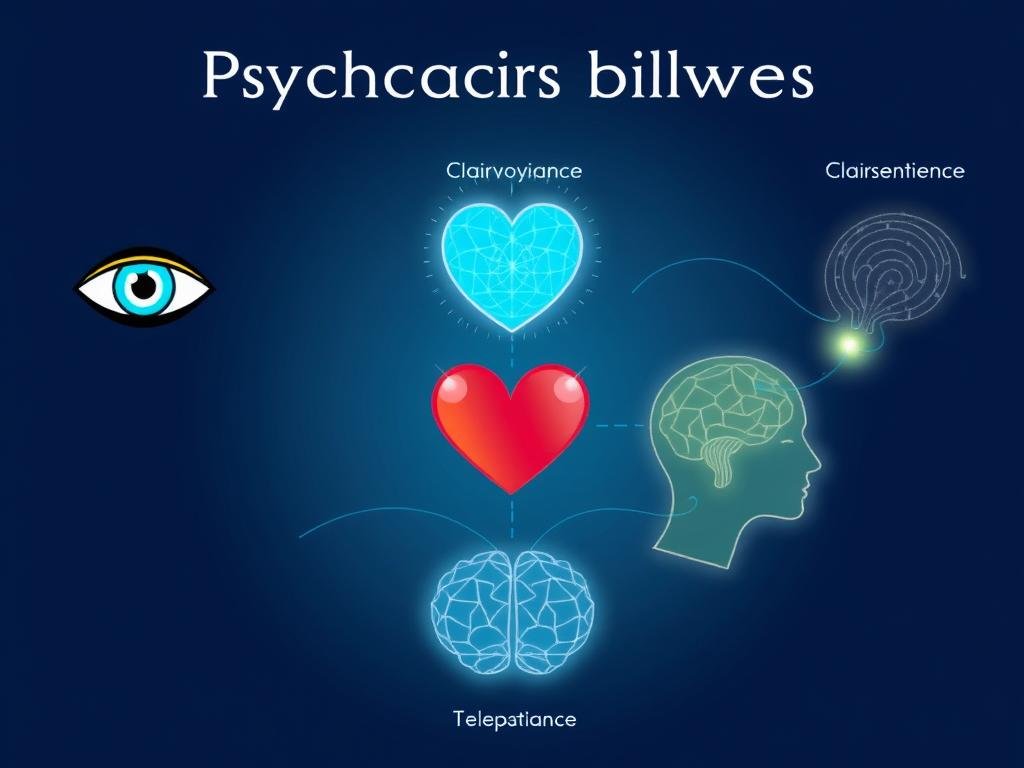
Clairvoyance: The Gift of Clear Seeing
- What it is: Receiving visual impressions beyond ordinary sight — images, symbols, or whole scenes in the mind’s eye.
- How it might feel: A sudden, vivid mental picture of a place you haven’t visited or a clear image in a dream that later resonates.
- Quick test: Try a simple remote-viewing exercise: have a friend place an object in a sealed box while you visualize and note impressions, then compare notes.
Many creative people experience clairvoyant-style flashes — a daydream or image that later “makes sense” in light of events. Treat these reports as anecdotal evidence and test them with controlled practice if you want more certainty.
Clairaudience: Hearing Beyond Sound
- What it is: Receiving auditory information internally — words, phrases, or melodies heard within the mind rather than through the ears.
- How it might feel: Hearing your name called in a quiet house, or an unexpected lyric popping into your head that addresses a current situation.
- Quick test: Meditate briefly and note any spontaneous phrases or sounds; keep a journal to track timing and accuracy.
Musicians and people sensitive to sound sometimes report more frequent clairaudient impressions; again, these are subjective experiences that benefit from journaling and pattern tracking.
Clairsentience: Feeling the Unseen
- What it is: Sensing emotions, physical sensations, or energetic impressions that relate to people, places, or events.
- How it might feel: A gut feeling about a person, sudden goosebumps in response to an image, or a change in internal temperature when entering a room.
- Quick test: Before meeting someone, note your physical impressions and later compare them to the interaction. Over time patterns may emerge.
Clairsentience often underlies the common expression “I just feel like…” — a bodily sense that carries information. It’s one of the most commonly reported senses and closely linked to practices like energy healing.
Claircognizance: Knowing Without Learning
- What it is: Instant, unearned knowing — a clear idea or insight that appears without an obvious source.
- How it might feel: Solving a problem “out of nowhere” or receiving a fact that later proves true even though you had no evidence.
- Quick test: Ask a simple question, write the first answer that comes to mind, and check accuracy later; track results to see if a pattern develops.
People who describe strong claircognizance often say the information arrives fully formed in the mind. Researchers and skeptics note that fast, unconscious cognitive processes can also create the feeling of “just knowing,” so balanced testing is recommended.
Other Psychic Abilities
Telepathy: Mind-to-mind impressions — sending or receiving thoughts, emotions, or images. Try paired experiments (one person thinks of an item, the other records impressions) to test this ability.
Precognition: Impressions or dreams about future events. People report prophetic dreams or a sense that something “will happen” before it does; treat such reports cautiously and log them carefully.
Psychometry: Gleaning information by touching objects, based on the belief that objects carry energetic imprints. Practical test: hold a sealed personal item and record impressions, then verify with the owner.
Mediumship: Perceiving or communicating with entities some describe as deceased. Mediumship raises ethical cautions — vulnerable people may be emotionally affected, so approach with care and clear boundaries.
Remote Viewing: Attempting to describe distant or unseen targets using extrasensory perception. Historically, military programs investigated remote viewing (reported under names like Project Stargate); those accounts are mixed and remain controversial.
Psychokinesis: Influencing physical systems with intention (e.g., affecting random number generators). Claims exist, but reproducible scientific evidence is limited; treat such claims skeptically and prioritize rigorous testing.
How these abilities look in practice varies widely: a psychic reading might combine clairvoyant images, clairsentient feelings, and claircognizant knowledge — or it might rely heavily on cold-reading skills. If you want to explore further, try the guided exercises in the development section or download the 7-day practice guide to build simple tests and track results.
Discover Your Natural Intuitive Abilities
Everyone has intuitive potential waiting to be developed. Our free 7-day guide delivers simple, daily exercises to improve dream recall, notice intuitive “hits,” and strengthen your natural psychic senses—practical steps you can use right away.
Psychic Phenomena Through History: A Cultural Tapestry

Stories of extrasensory perception and divination appear across cultures and eras. From oracles and shamans to contemporary mediums, people have long sought information about the past, the present, and possible futures through practices that blend ritual, interpretation, and experiential insight.
Ancient Civilizations and Divination
In many ancient cultures, divination served practical and ceremonial roles. At Delphi, priestesses known as the Pythia entered trance-like states to deliver prophecies that influenced political and personal decisions; historians debate how these oracular pronouncements were produced and interpreted. Egyptian priests recorded and interpreted dreams to anticipate seasonal changes and social needs, while Chinese traditions developed the I Ching (the Book of Changes), a system of symbols and interpretations used for guidance for many centuries (its origins are ancient and debated among scholars).
Indigenous traditions worldwide — including various Native American and shamanic practices — used vision quests, ritual, and communication with spirit guides as ways to access wisdom for the individual and community. These practices are culturally specific and often embedded in broader spiritual frameworks, so they should be approached with respect and contextual understanding.
The Rise of Spiritualism
The 19th century brought a surge of interest in mediumship and spirit communication. The Fox sisters’ 1848 events in New York helped spark the Spiritualism movement, leading to popular séances and a growing public appetite for evidential mediumship. That era also saw the founding of the Society for Psychical Research (1882), which attempted to apply scientific methods to investigate claims of psychic phenomena — an early effort to bridge experience and empirical inquiry.
Notable intellectuals such as William James and Arthur Conan Doyle engaged with Spiritualist claims, while later figures like Carl Jung explored the intersection of symbolism, dreams, and the collective unconscious. At the same time, many Spiritualist phenomena were contested or exposed as fraud, underscoring the need for skepticism alongside open inquiry.
Psychic Abilities in Modern Times
During the 20th century, both increased scientific scrutiny and new investigative avenues emerged. Researchers like J.B. Rhine conducted ESP card experiments at Duke University in the 1930s that helped formalize experimental parapsychology. The ganzfeld studies (telepathy experiments using sensory-reduction techniques) produced mixed results that some researchers interpreted as small, statistically significant effects across labs, while skeptics emphasized methodological concerns.
Government interest also surfaced: Cold War-era programs reportedly explored remote viewing for intelligence purposes (projects often referenced under names like Stargate). Declassified documents show experimental work and debate over utility; mainstream agencies generally concluded the results were inconsistent for reliable operational use.
Institutions such as the Institute of Noetic Sciences and the Rhine Research Center continue to study consciousness and psi phenomena, and digital technology has expanded access to psychic readings — connecting clients and practitioners worldwide via online platforms. This growth has made psychic services widely available, while scientific engagement remains cautious and focused on replicable evidence.
The Science of Psychic Phenomena: Research and Skepticism
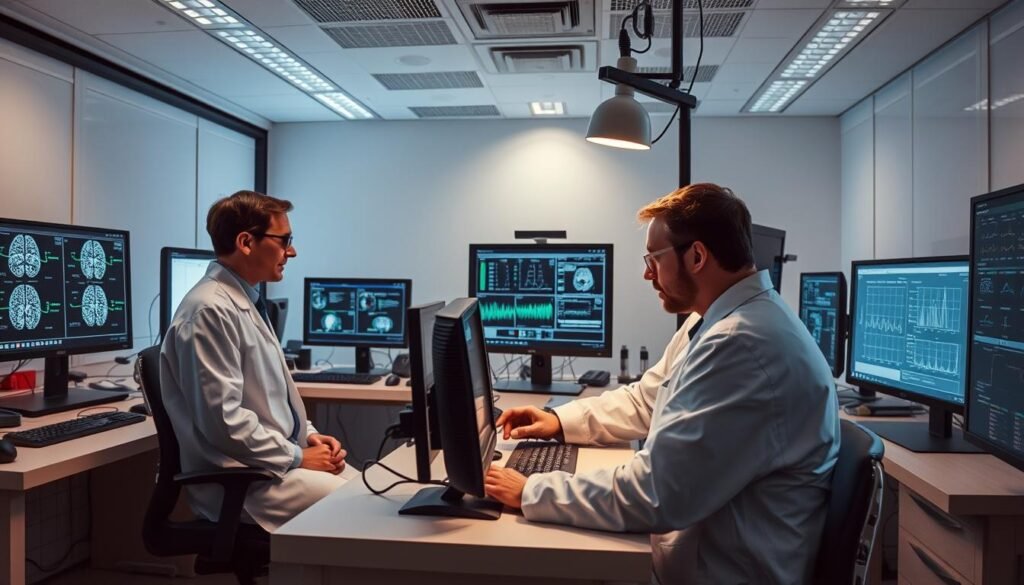
Scientific opinion on psychic abilities remains divided. A small research community in parapsychology continues to run controlled experiments, but mainstream science highlights reproducibility problems and the lack of a clear mechanism that fits within established physics.
Parapsychology Research
Parapsychology has developed standardized tests and statistical approaches to investigate phenomena such as telepathy, precognition, and psychokinesis. Landmark studies often referenced include J.B. Rhine’s ESP card work and the ganzfeld experiments; programs like Princeton Engineering Anomalies Research (PEAR) reported long-term investigations into mind–matter interactions. These programs produced intriguing data for some researchers, yet conclusions remain contested and calls for more rigorous replication persist.
Skeptical Perspectives
Critics cite several recurring issues: difficulty reproducing positive findings consistently, potential methodological flaws, publication bias, and cognitive explanations such as confirmation bias and the Barnum effect. Cold reading and other social techniques can also create the impression of accuracy in psychic readings, which underscores the need for controlled testing and transparency.
“The plural of anecdote is not data. Personal experiences, while compelling to the individual, cannot substitute for controlled scientific investigation when evaluating extraordinary claims.”
Current Research Directions
Contemporary researchers explore connections among consciousness studies, neuroscience, and theoretical physics. Some propose speculative links to quantum phenomena (for example, entanglement-like models) to explain nonlocal correlations, while neuroscientists examine brain states associated with reported experiences. These lines of inquiry are exploratory: they generate hypotheses and invite careful, transparent methods rather than providing definitive mechanisms.
Overall, the historical record shows persistent human interest in psychic information across time — but the scientific record emphasizes careful testing, clear methodology, and balanced interpretation. When reading historical or contemporary claims, note both the intriguing anecdotes and the methodological context in which they were produced.
Authentic Abilities vs. Deception: Navigating the Psychic Landscape
Whether you’re thinking about consulting a psychic or developing your own abilities, it helps to know how to tell sincere practitioners apart from those using manipulative techniques. The field includes caring, ethical people with genuine skills and, unfortunately, opportunists who exploit trust for profit.
Common Deceptive Techniques
Knowing the common tricks helps you pay attention and protect yourself:
Quick examples: cold reading vs. an ethical reading
- Cold reading (anonymized): The reader says, “I’m getting family trouble,” then waits for confirmation and fills in details after the client volunteers them.
- Ethical reading (anonymized): The reader states limits up front, asks permission to proceed, offers a few specific impressions without pressuring for confirmation, and frames them as possibilities rather than certainties.
Signs of Authentic Psychic Practitioners
While no single test proves authenticity, look for these indicators:
Red flags — pay attention if a practitioner: predicts imminent catastrophe, claims you are cursed and only they can fix it, asks for large recurring payments, tries to isolate you from friends or family, or guarantees outcomes such as lottery wins or reuniting with an ex. These are common manipulation tactics.
The Ethics of Psychic Practice: Responsibility and Boundaries

Practicing or receiving psychic work involves ethical responsibilities. The best practitioners prioritize the client’s well-being, respect privacy, and encourage autonomy rather than dependency.
Ethical Guidelines for Practitioners
Responsible professionals typically follow standards such as:
Ethical Considerations for Clients
Clients also have a role in keeping readings constructive:
Cultural and Religious Considerations
Psychic practices intersect with diverse cultural and religious traditions, each with their own ethical frameworks. In many indigenous communities, psychic or shamanic abilities are treated as sacred responsibilities with specific protocols — treat these traditions with respect and avoid appropriation. If you’re unsure, seek guidance from culturally knowledgeable sources.
Psychic Abilities in the Modern World: Practical Applications

Beyond entertainment and private readings, intuitive skills and reported psychic abilities show up in many areas of modern life. In each case these impressions typically serve as supplementary information—an extra way to spot possibilities, patterns, or unseen dynamics—not as a replacement for standard evidence-based methods.
Law Enforcement and Investigation
Some investigators and agencies have, at times, consulted individuals claiming intuitive insight on difficult cases such as missing persons. Historically, Cold War–era programs reportedly explored remote viewing for intelligence gathering (often referenced under names like “Stargate”). Declassified records show experimental work and debate; most agencies concluded the results were inconsistent and not reliable as primary evidence. When psychics have been involved, their impressions are typically treated as one lead among many, not proof.
Health and Healing
Medical intuition and energy-based healing practices appear in complementary health contexts. A few practitioners report using intuitive impressions to supplement standard assessments, but mainstream medicine emphasizes conventional diagnosis and treatment first. Energy modalities such as Reiki, therapeutic touch, and pranic healing incorporate aspects of clairsentience (sensing energy), and many recipients report subjective benefits—though clinical evidence varies and is limited.
Business and Professional Consulting
Some companies have experimented with intuitive consultants for team dynamics, creative problem-solving, or hiring insights. In these cases, intuitives typically frame their input as enhanced decision-making rather than mystical prescriptions. Reports that firms like Sony, Google, or Apple have used intuitives exist in popular coverage, but such anecdotes should be treated cautiously and verified before being cited as widespread corporate practice.
Creative Arts and Innovation
People working in creative fields frequently describe sudden ideas or “downloads”—moments when a complete concept arrives fully formed, resembling claircognizance or clairvoyance. Artists and inventors sometimes cultivate receptive states (meditation, dreamwork, freewriting) to invite these moments, using intuition as one of several tools that foster innovation.
Developing Your Intuitive Abilities: A Practical Approach

Whether you see intuition as a natural mental process or a psychic faculty, practicing consistent habits is the most reliable way to notice and strengthen it. The following foundation practices are short, practical, and suitable for busy people and beginners.
Foundation Practices
Developing Specific Abilities
After establishing a foundation, try short, repeatable exercises for targeted development. These are practice ideas, not guarantees.
Clairvoyance Exercises
Clairsentience Exercises
Claircognizance Exercises
Two-minute daily exercise (try this now)
Close your eyes, breathe deeply for 30 seconds, ask a clear yes/no question, and note the first impression (image, feeling, word). Repeat once and journal the result. Do this daily for a week to see if patterns emerge.
Integrating Intuition Into Daily Life
Progress indicators: Over weeks and months, signs of growth include better dream recall, more frequent meaningful coincidences, clearer impressions that later make sense, and a steadier internal guidance system.
Common Myths and Misconceptions About Psychic Abilities
Psychic phenomena attract strong opinions and many misconceptions. Clearing up these myths helps readers make better sense of reported experiences and separate sensational claims from practical guidance.
Myth: Psychic abilities are either completely real or complete nonsense.
Reality: Most evidence and experience point to a nuanced middle ground. Intuition and subtle perception exist on a spectrum—some people report occasional impressions while others report more frequent, detailed experiences. Whether those impressions reflect a distinct psychic faculty or heightened cognitive pattern recognition is still debated among researchers and practitioners.
Myth: Psychics should be 100% accurate.
Reality: Accuracy in readings is probabilistic, not absolute. Even experienced practitioners interpret symbolic impressions that require context, and outcomes can shift based on choices and circumstances. Treat psychic information as one input among others, not a guaranteed forecast.
Myth: Psychic abilities are supernatural gifts given to special people.
Reality: Many teachers and some researchers compare psychic abilities to other human talents—present in varying degrees and developable with practice. People who show strong intuitive skills often train them over time with regular exercises and disciplined journaling.
Myth: Skepticism blocks psychic abilities.
Reality: Healthy skepticism and critical thinking are compatible with developing intuition. Questioning, testing, and tracking results help refine abilities; blind belief is neither necessary nor advisable.
Myth: Psychic abilities allow complete access to others’ private thoughts and information.
Reality: Most practitioners describe receiving partial impressions—images, feelings, words—rather than a full transcript of another person’s mind. Ethical readers emphasize consent and privacy; they report that boundaries often limit what appears in a reading.
Myth: Consulting psychics means surrendering your free will or agency.
Reality: Responsible readings emphasize personal agency. A good practitioner frames insights as information to help you make choices, not commands to follow.
Resources for Further Exploration
If you want balanced perspectives, these books, organizations, and online tools combine practical exercises with critical inquiry—good starting points for beginners and curious readers alike.
Books for Beginners
Developing Intuition
By Shakti Gawain — practice-oriented
Accessible exercises and journaling prompts designed to help people notice subtle impressions in daily life.
The Intuitive Way
By Penney Peirce — skills and structure
A stepwise program for developing intuition as a practical life skill, with exercises suited for ongoing practice.
Real Magic
By Dean Radin, PhD — research-focused
A scientist’s tour of laboratory findings and controversies in the study of psi phenomena; useful for readers seeking a research lens.
Research Organizations
Institute of Noetic Sciences (IONS) — Founded by astronaut Edgar Mitchell; focuses on consciousness research and human potential (practice-informed and research-friendly).
Society for Scientific Exploration — Interdisciplinary forum for studying anomalous phenomena with scientific methods.
Rhine Research Center — Continues the legacy of J.B. Rhine’s early ESP investigations; resource for historical and contemporary parapsychology work.
Windbridge Research Center — Research on mediumship and survival claims, with a focus on evidential methods.
Division of Perceptual Studies (University of Virginia) — Academic unit investigating phenomena related to consciousness and post-mortem survival claims.
Parapsychological Association — Professional organization connecting researchers and scholars in the field.
Online Learning Resources
Begin Your Journey of Intuitive Discovery
Curious about developing your intuitive skills or learning how readings work? Start a simple 7‑day plan to improve dream recall, notice intuitive “hits,” and build a steady inner guidance system—practical steps you can use right away.
Embracing the Mystery: A Balanced Perspective

Exploring psychic phenomena invites curiosity about the limits of perception and the nature of consciousness. Whether you approach the subject from science, spirituality, or personal experience, it raises thoughtful questions about how we gather information about the past, present, and possible future.
A balanced perspective acknowledges intriguing reports and studies that suggest some people experience reliable impressions, while also respecting the legitimate concerns of skeptics about reproducibility and methodology. Extraordinary claims merit careful testing, transparent methods, and cautious interpretation.
Practically speaking, learning to notice your intuitive sense can benefit everyday life: many people report that improving their intuition helps with decision-making, creativity, and emotional awareness. These are commonly reported outcomes rather than guaranteed effects—treat them as potential benefits to explore through practice.
Next steps you can try today:
- Do a 5-minute grounding exercise (breathe, notice sensations in the body) to tune into signals from your mind and heart.
- Download the 7‑day guide to try short daily practices and track results.
- Read one of the recommended books in the resources section to balance practice with research-based perspectives.
Keep an open but critical mind: test impressions, journal outcomes, and consult reputable sources. Trust your experiences while asking hard questions, and remember that much of the insight you seek may arrive quietly—an inner nudge, a color in a dream, or a small thing that, over time, begins to make sense.